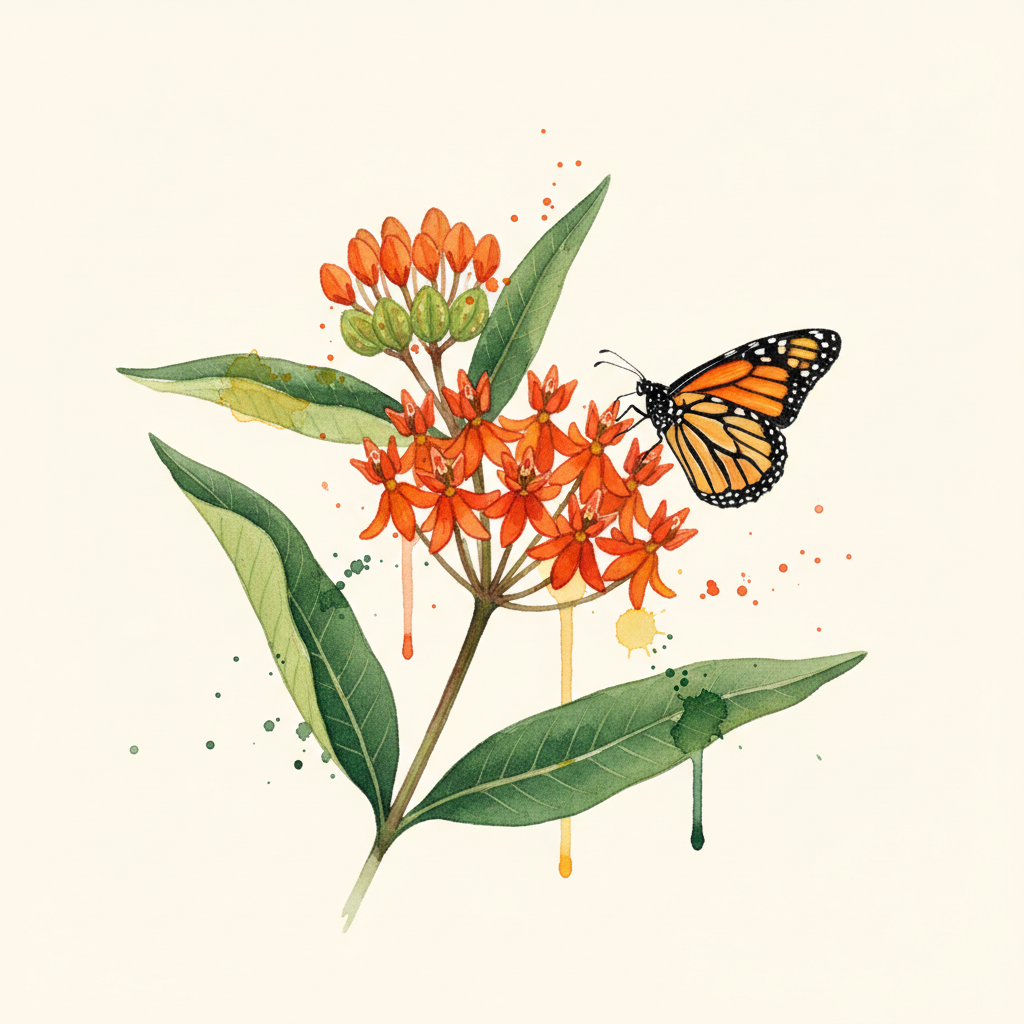
Vivid orange-red flat-topped clusters that monarchs and swallowtails cannot resist. Drought-proof once established.
Toxic to cats and dogs. The sap carries heart-affecting compounds, so a substantial ingestion is worth a vet call rather than a wait and see.
The milky sap irritates skin and eyes. Wear gloves to cut it, and keep your hands away from your face until you have washed them.
- Bloom Season
- Jun to Aug
- USDA Zones
- 3-9
- Sun
- Full Sun
- Water
- Low - drought tolerant
- Mature Height
- 18-24"
- Bloom Colors
- OrangeYellow
Companion plants, planting tips, FAQ, and more
Asclepias tuberosa is the scientific name used by botanists, nurseries, and seed catalogs to identify Butterfly Milkweed unambiguously. The genus Asclepias places it within a specific plant family, and using the botanical name avoids the confusion that comes with regional common names. If you're shopping for Butterfly Milkweed, looking up plant care details, or comparing varieties, searching by Asclepias tuberosa will give you the most precise results.