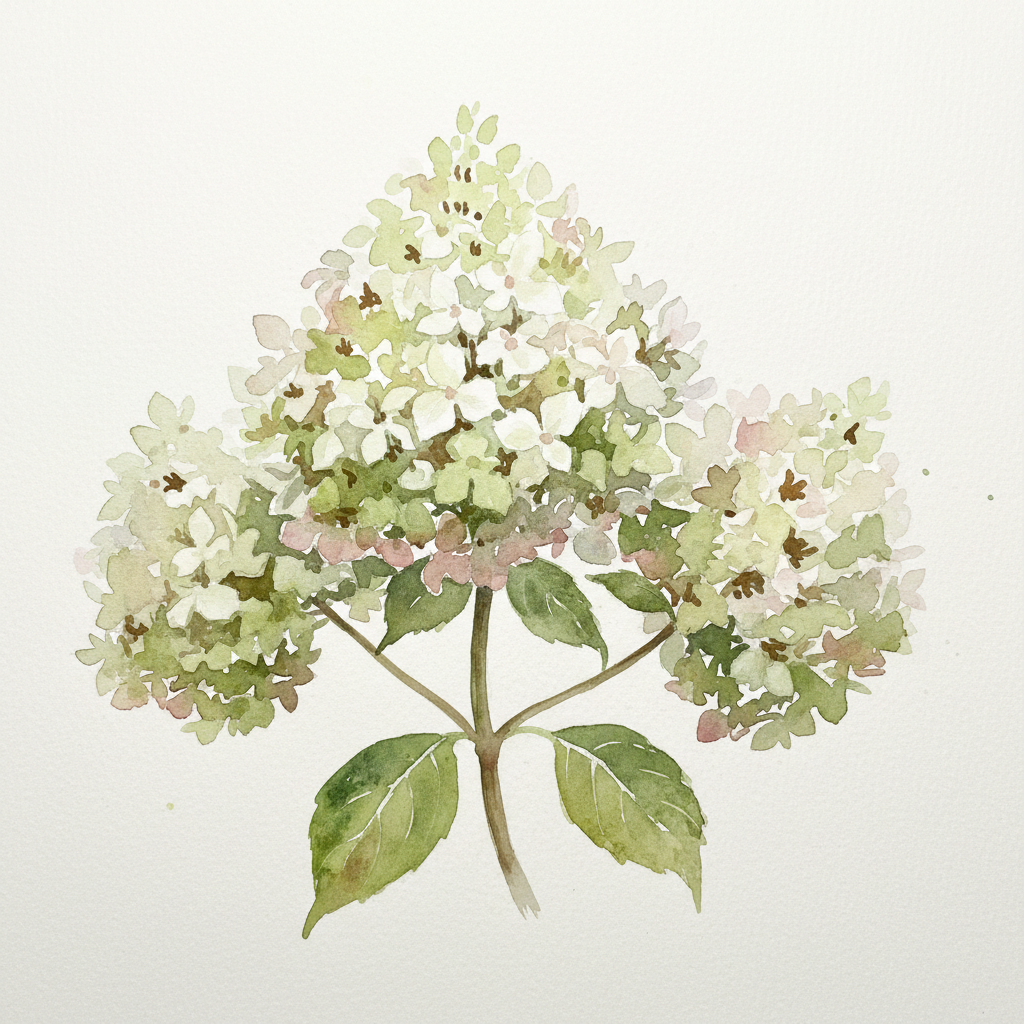
Huge cone blooms up to 15 inches long open white and age to dusty pink. One of the largest flowered paniculatas you can grow.
The leaves and flower buds contain a cyanide compound. It is rarely a problem for people, but it is listed as toxic to dogs, cats, and horses, so keep prunings away from animals that browse.
- Bloom Season
- Jul to Sep
- USDA Zones
- 3-8
- Sun
- Full Sun or Part Sun
- Water
- Moderate - regular watering
- Mature Height
- 6-8'
- Bloom Colors
- WhitePink
Companion plants, planting tips, FAQ, and more
Hydrangea paniculata 'Phantom' is the scientific name used by botanists, nurseries, and seed catalogs to identify Phantom Hydrangea unambiguously. The genus Hydrangea places it within a specific plant family, and using the botanical name avoids the confusion that comes with regional common names. If you're shopping for Phantom Hydrangea, looking up plant care details, or comparing varieties, searching by Hydrangea paniculata 'Phantom' will give you the most precise results.