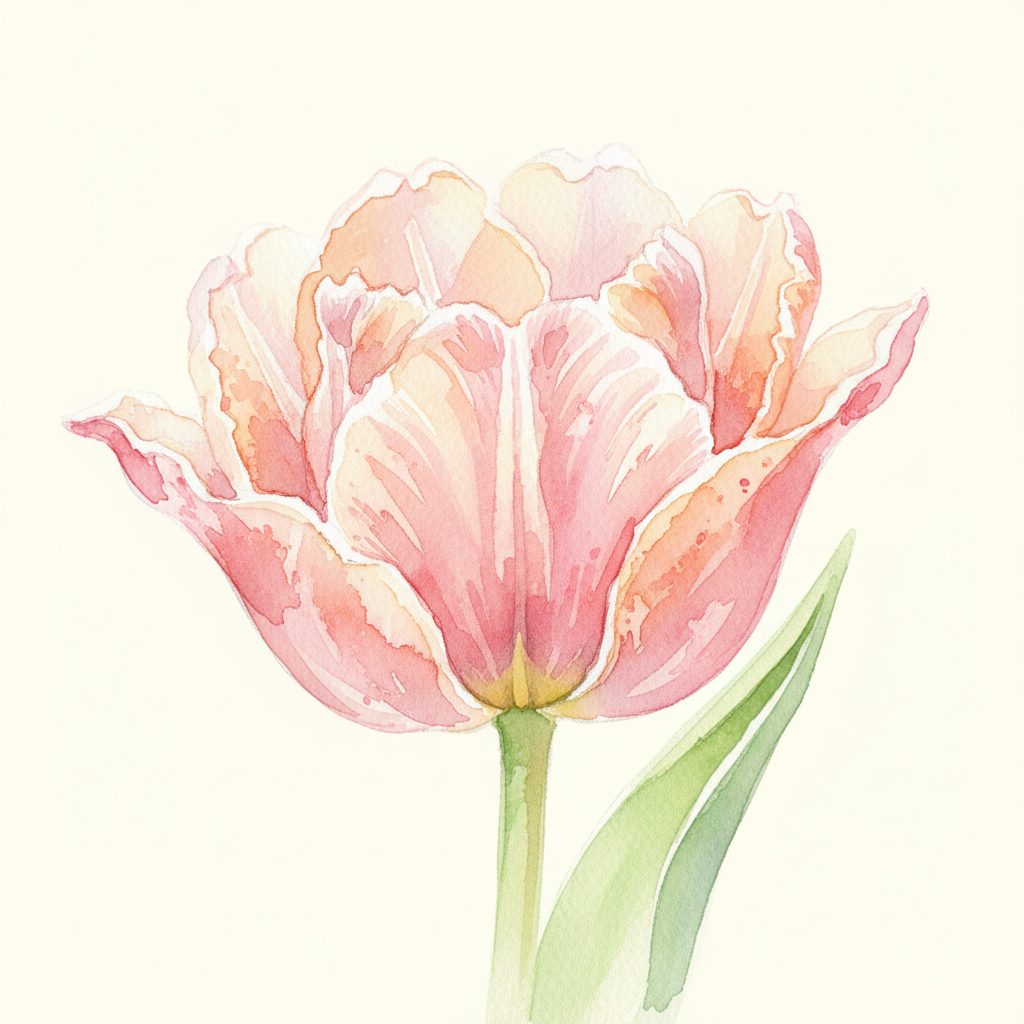
Double late tulip that looks like a small peony in soft pink and cream. Long-lasting blooms with light fragrance.
The bulbs are the dangerous part for cats and dogs, and they hold far more of the toxin than the flower does. A pet that digs up a newly planted bed is the usual way this happens. Vomiting and drooling are the common signs; plant where a dog does not dig and keep spare bulbs stored away.
- Bloom Season
- Apr to May
- USDA Zones
- 3-8
- Sun
- Full Sun
- Water
- Moderate - regular watering
- Mature Height
- 16-20"
- Bloom Colors
- PinkWhite
Companion plants, planting tips, FAQ, and more
Tulipa 'Angelique' is the scientific name used by botanists, nurseries, and seed catalogs to identify Angelique Tulip unambiguously. The genus Tulipa places it within a specific plant family, and using the botanical name avoids the confusion that comes with regional common names. If you're shopping for Angelique Tulip, looking up plant care details, or comparing varieties, searching by Tulipa 'Angelique' will give you the most precise results.