Sedum 'Autumn Joy': How to Grow the Fall Perennial That Returns
Autumn Joy is the late-season perennial that fails from kindness: rich soil and fertilizer make it flop. How to grow it, why it does better on lean ground, and why its botanical name keeps changing.
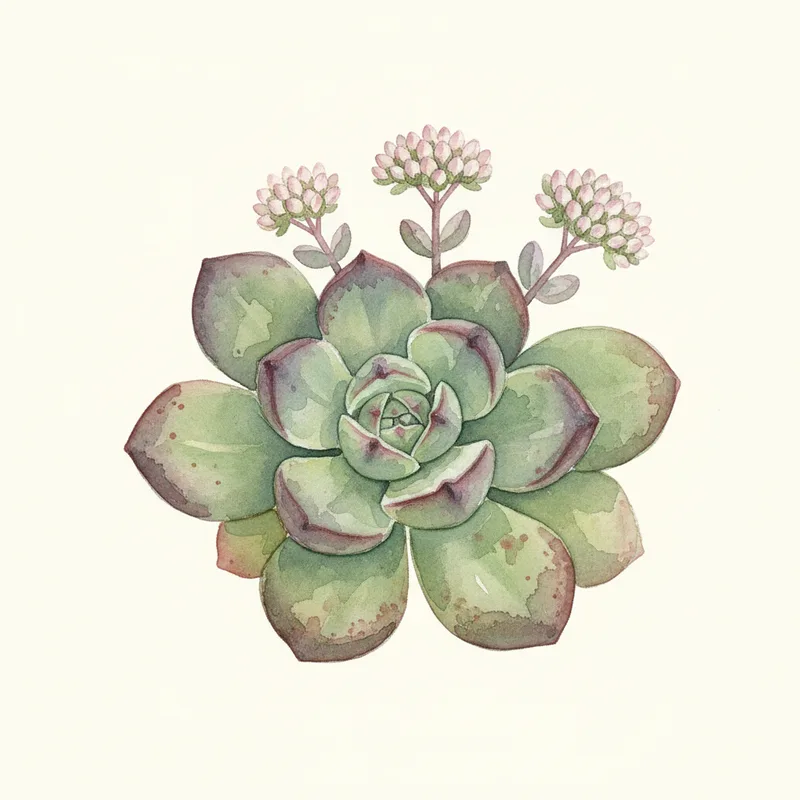
Most perennial problems come from neglect. 'Autumn Joy' sedum has the opposite problem: it is one of the only plants in a fall border that gets worse the better you treat it. Feed it, water it generously, plant it in rich garden soil, and by September you will have a wide, floppy, open-centered mess instead of the tight broccoli-headed clumps on the plant tag. Leave it alone in average, lean ground, and it holds itself up all season without a stake.
That is the one fact worth knowing before anything else. Everything below builds on it.
The rule that runs backward from every other perennial
Rich soil and fertilizer are supposed to be a gift. For 'Autumn Joy', they are the direct cause of its signature failure. PlantCareToday's growing guide is blunt about it: rich soil causes plants to have flopping stems and weaker growth, and the advice is to stay clear of high-nitrogen fertilizer varieties, since the nitrogen produces exactly the weak, lush growth that cannot hold up its own flower heads once they open and get heavy. Where the plant genuinely wants feeding, the same source recommends a light annual layer of compost instead, not a bagged fertilizer.
The open, splayed-apart look this produces even has a name, lodging, and it is the same failure mode as a lawn of grain flattened by wind and rain. On 'Autumn Joy' it usually shows up in exactly the conditions gardeners assume are ideal: moist, fertile, well-tended beds. Lean and dry is not a compromise here. It is the actual growing instruction.
What the plant asks for instead is plain: full sun, average to poor soil, and good drainage. Our own catalog listing has it right down to the texture, sandy or poor soil, low water once established, and that is not a minimum tolerance, it is the plant's preference.
The name keeps changing, and nobody has finished agreeing
If you go looking for care information under one name and end up on a page about a completely different plant, you have run into the same reclassification problem we covered in our aster growing guide, and 'Autumn Joy' sits right in the middle of it.
Missouri Botanical Garden's own Plant Finder entry files it as Hylotelephium 'Herbstfreude' AUTUMN JOY, and treats 'Herbstfreude', the original German name meaning Autumn Joy, and 'Autumn Joy' as effectively the same plant under two labels. Other widely used references instead list it as Hylotelephium spectabile 'Autumn Joy', filing it as a cultivar of a single parent species rather than a distinct hybrid. Both readings are in active circulation, on nursery tags and in care guides alike, and we are not going to pick a side here: the disagreement is real, and it has been real since the genus split off from the old, much broader Sedum in the first place.
What matters for growing it is simpler than the argument. You do not need to resolve the taxonomy to grow the plant well. If a tag, a search result, or a nursery still calls it plain Sedum 'Autumn Joy', that is the older name for the same plant, still in wide commercial use, and the growing advice does not change depending on which label you are holding.
What the season actually looks like
Spring opens with tight rosettes of pale, succulent gray-green foliage pushing up from bare ground, easy to overlook next to anything already in leaf. That rosette thickens through early summer into upright, fleshy stems, still green, still unremarkable, which is exactly why so many gardeners forget the plant exists until August.
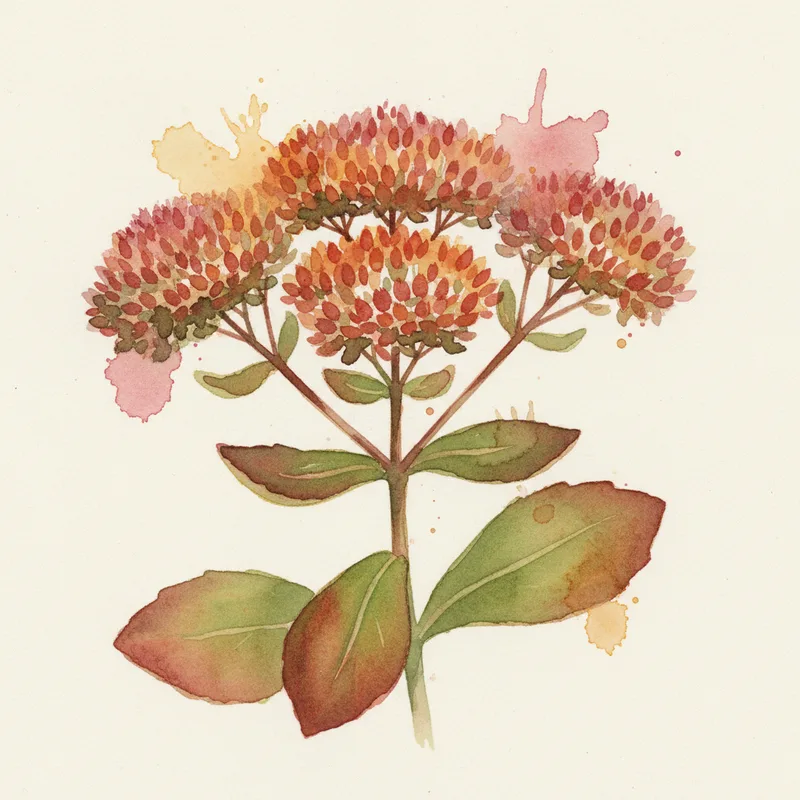
Then the flower heads form: broccoli-like clusters that open pale pink in late summer and slowly deepen through copper and rust into a dark bronze-red by the time frost arrives. Our own listing puts the bloom window at August through October, and that long, slow color shift, not a single bloom event, is the actual show. It is also why the plant reads as a fall perennial even though the buds have usually been visible since midsummer.
Cut it back, or leave it standing
The same honest tradeoff applies here as in our winter interest guide: a dried seed head is not a dead plant, it is a decision.
Leave the flower heads standing through winter and they hold their structure well into the cold months, dark and sculptural against snow, exactly the kind of shape that guide argues most winter gardens are missing. Cut the stems down instead and you get a tidier bed going into spring, at the cost of that structure. Purdue Extension's Yard and Garden column frames the tradeoff from the other direction, through what happens if you never intervene at all: the upright sedums, now renamed Hylotelephium, need to be divided every few years to keep them from crashing to the ground in the fall. Whichever you choose for the top growth, the clump itself still needs periodic division regardless, which is the next section. If cutting back is your plan, our fall garden cleanup guide covers the wider question of what else in the bed should stay standing for wildlife and what should come down.
Division and propagation
Division solves two problems at once: it is how you propagate the plant for free, and it is the fix for a clump that has started flopping from age and crowding rather than from soil. Purdue's guidance is to lift the entire clump in spring once new shoots are a few inches tall, split it into smaller sections, and replant immediately. PlantCareToday adds a practical timing note: divide on a day that is not too hot, dig around the perimeter until the sections lift easily out of the soil, and keep the new divisions watered until they root in their new spot.
Purdue also offers a lower-effort alternative to full division for keeping the plant compact: pinching the stems back in early summer. It is not a permanent fix, division eventually becomes necessary either way, but it buys time between divisions and does double duty as a second, non-soil-related way to head off flopping in a plant that is otherwise being grown correctly.
'Autumn Joy' and asters are not interchangeable
The two get planted together constantly, and for good reason, they bloom at the same time and their colors flatter each other. But they want opposite conditions. Our aster growing guide covers a plant that wants moist, average-to-rich soil and struggles in anything too lean or dry. 'Autumn Joy' wants the reverse: lean, dry, average-to-poor ground, and it is the richer end of that range that causes its main problem. Plant them in the same bed and you are usually splitting the difference rather than giving either one its ideal spot, which is a fine trade for the look, as long as you know that is what you are doing.
Common Autumn Joy sedum questions
Why is my Autumn Joy sedum flopping open in the middle?
Almost always soil richness, fertilizer, or both. PlantCareToday's guide is direct about the cause: rich soil produces flopping stems and weaker growth, and high-nitrogen fertilizer makes it worse by encouraging soft, heavy growth that cannot support the flower heads once they open. The fix is not more care, it is less: lean, well-drained soil, and compost instead of fertilizer if the plant needs feeding at all. Age and overcrowding cause a second kind of flop that soil cannot fix, which is where division comes in.
Is Autumn Joy sedum the same as Hylotelephium 'Herbstfreude'?
Functionally, yes, though the exact taxonomic relationship is disputed among sources. Missouri Botanical Garden's Plant Finder entry lists it as Hylotelephium 'Herbstfreude' AUTUMN JOY, treating the two names as the same plant, while other references file 'Autumn Joy' as a cultivar of Hylotelephium spectabile instead. Older tags and some nurseries still use the original genus, Sedum 'Autumn Joy'. All three names point at the same plant in the trade; the growing advice does not change based on which one you are holding.
Should I cut back Autumn Joy sedum in fall?
Either choice is defensible. Leaving the seed heads standing gives you winter structure, dark and upright against snow, which our winter interest guide covers in more depth. Cutting the stems back produces a tidier bed heading into spring. Neither choice replaces division: Purdue Extension notes the upright sedums need dividing every few years regardless, or they eventually flop from age and crowding on their own.
When does Autumn Joy sedum bloom?
August through October, per our own listing, and the color is the real event: pale pink heads in late summer deepen through copper and bronze to a dark rust-red by the time frost arrives, rather than a single bloom moment.
Can I grow Autumn Joy sedum with asters?
Yes, and the two are a classic fall pairing, but they want opposite soil conditions. Asters prefer moist, average-to-rich ground; Autumn Joy prefers lean, dry, average-to-poor soil and tends to flop in anything richer. Planting them together usually means splitting the difference on soil rather than giving either one its ideal spot, which most gardens do successfully anyway.
Related reading
- Symphyotrichum: How to Grow Asters That Return
- Building a Winter Interest Garden (Plants for the Bare Months)
- Fall Garden Cleanup: What to Cut Back and What to Leave
- What to Plant in August: The Month You Plant for Next Year
Browse fall in your zone
See what blooms alongside 'Autumn Joy' where you live: Zone 4 in fall · Zone 5 in fall · Zone 6 in fall · Zone 7 in fall · Zone 8 in fall. Or start from the plant finder and let it match your zone for you.
What's growing, what's blooming, what's worth planting.
For gardeners who like to stay ahead.